In a world where fossil fuels are about as popular as a flat soda, renewable energy is stepping up to the plate. It’s not just a trend; it’s a necessity. With climate change knocking on our doors, exploring creative renewable energy ideas can feel like finding a golden ticket in a chocolate bar. Who wouldn’t want to power their homes with sunshine, wind, or even the occasional cow pat?
Overview of Renewable Energy Ideas
Renewable energy plays a crucial role in reducing dependence on fossil fuels. Solar energy stands out for its accessibility and immense potential. Wind energy utilizes turbines to convert wind movement into electricity, showcasing a clean and efficient method. Biomass, derived from organic materials, offers another sustainable option.
Hydropower leverages flowing water to generate energy, making it one of the oldest and most reliable within the renewable sector. Geothermal energy taps into the Earth’s internal heat, providing a consistent energy source. Innovations in energy storage, such as batteries, enhance the effectiveness of these renewable sources.
In addition, tidal and wave energy capture the power of ocean movements, representing a growing frontier in energy production. Community solar projects allow shared access to solar power, democratizing energy access for underserved populations.
Energy efficiency measures complement renewable technologies by optimizing usage, further lowering emissions. Integrating smart grid technologies promotes better energy distribution and management, bridging the gap between generation and consumption.
Investments in research and development pave the way for breakthroughs in renewable technologies. Collaborations between governments, businesses, and researchers foster innovative solutions. As renewable energy options expand, their adaptability becomes vital for addressing varying geographic and economic conditions.
Types of Renewable Energy
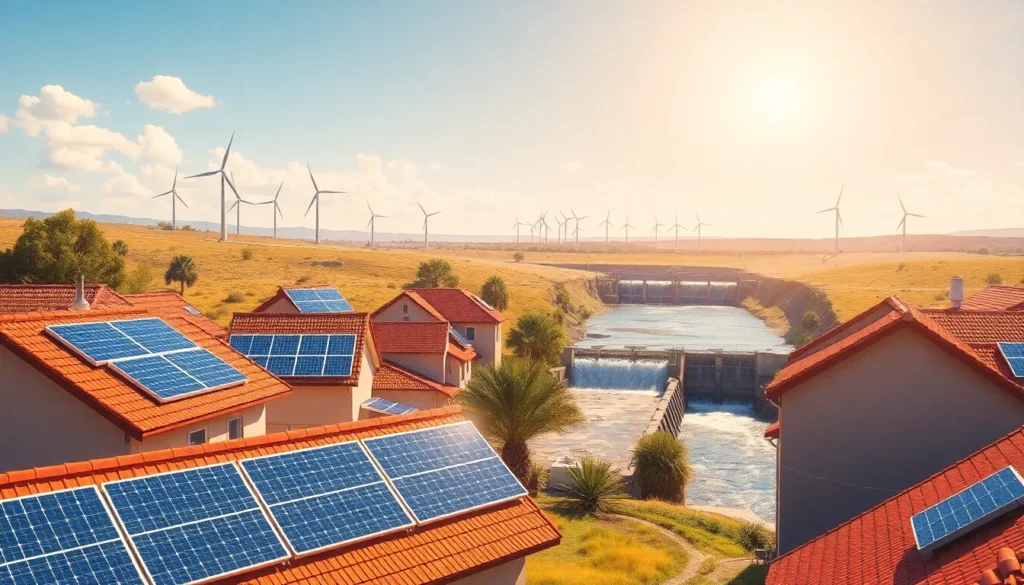
Various renewable energy sources contribute to a sustainable future. Each type plays a vital role in meeting energy demands while reducing environmental impacts.
Solar Energy Solutions
Solar energy captures sunlight to produce electricity, utilizing photovoltaic cells or solar thermal systems. Households often install solar panels to harness this abundant resource. Innovations like solar shingles integrate seamlessly with home construction. Community solar programs enable shared access, making solar energy attainable for renters and low-income households. Enhanced battery storage solutions maximize electricity use from solar systems, ensuring availability even during cloudy days.
Wind Power Innovations
Wind power generates energy from air flow using turbines. Offshore wind farms have gained popularity, given their potential for higher wind speeds and larger energy outputs compared to onshore counterparts. Turbine technology consistently evolves to improve efficiency and reduce costs. Innovative designs, such as vertical-axis turbines, offer flexibility for urban settings. Collaborative projects involving multiple stakeholders help increase the deployment of wind farms in various regions.
Hydroelectric Energy Concepts
Hydroelectric energy transforms the movement of water into electricity through dams and run-of-river systems. It stands as one of the oldest sources of renewable energy, providing stable power generation. Pumped storage hydroelectricity allows for energy storage and release based on demand, enhancing grid stability. Small-scale hydropower solutions present less environmental impact while still providing crucial energy assistance. Integrating modern technology further increases efficiency in existing hydroelectric systems.
Emerging Technologies in Renewable Energy
Emerging technologies play a crucial role in advancing renewable energy solutions. Innovators constantly seek ways to enhance energy efficiency and sustainability.
Energy Storage Advancements
Energy storage solutions have seen significant advancements in recent years. Lithium-ion batteries are now more efficient and cost-effective, driving down overall system costs. Solid-state batteries provide even greater energy density and safety features, making them a promising alternative. Recent breakthroughs in flow batteries allow for long-duration energy storage, enabling better integration of renewable sources. Companies invest in research to improve battery recycling processes, thus minimizing environmental impacts. Moreover, collaborations among technology firms and research institutions accelerate innovations in energy storage systems.
Smart Grid Developments
Smart grid technologies enhance the distribution and management of renewable energy. These systems utilize real-time data analysis to optimize energy flows across grids. Enhanced communication between devices allows for better demand response strategies, which adjust energy consumption based on availability. Integrating renewable sources into existing grids ensures greater reliability and efficiency. Utilities leverage advanced software solutions to predict energy usage patterns, further optimizing performance. Moreover, investments in smart meters facilitate improved energy monitoring for consumers, promoting energy efficiency and sustainability.
Benefits of Adopting Renewable Energy Ideas
The adoption of renewable energy ideas presents numerous benefits, appealing to both environmental and economic aspects.
Environmental Impact
Emitting little to no greenhouse gases, renewable energy sources significantly reduce air pollution. Solar, wind, and hydropower contribute to clean air and healthier ecosystems. Biodiversity thrives in regions utilizing these energy solutions, fostering natural habitats. Land and water conservation efforts also see improvement through responsible energy practices. Innovations in energy production encourage sustainable land use while minimizing ecological disturbances. Biomass and geothermal options utilize waste and reduce landfill contributions. Transitioning to renewable energy ensures a greener planet for future generations.
Economic Advantages
Renewable energy technologies stimulate job creation across various sectors, including manufacturing and installation. Investing in these technologies often leads to energy independence, reducing reliance on imported fuels. With decreasing costs, solar and wind energy provide cost-effective alternatives to fossil fuels. Local economies thrive as communities harness renewable resources, creating sustainable growth paths. Energy prices stabilize due to diversification of energy sources, mitigating volatility caused by external markets. Furthermore, utility companies can enhance profitability by integrating renewable energy solutions, ensuring long-term investment viability.
Challenges in Implementing Renewable Energy Ideas
Several challenges impact the implementation of renewable energy solutions. These obstacles obstruct the transition from fossil fuels to sustainable alternatives.
Technological Barriers
Technological barriers significantly hinder the widespread adoption of renewable energy. Inadequate infrastructure for energy storage limits the ability to harness intermittent sources like wind and solar. Efficiency issues in current technology can lead to decreased output, impacting overall effectiveness. Deployment of new technologies often faces high upfront costs, deterring investment. Access to advanced technologies varies across regions, complicating adoption for some communities. Additionally, the pace of innovation must accelerate to keep up with growing energy demands.
Policy and Regulation Issues
Policy and regulation issues present major hurdles to renewable energy implementation. Inconsistent regulations across different states and countries create uncertainty for investors. Sufficient incentives and subsidies are crucial for development, yet many regions lack these support systems. Complex permitting processes can delay project timelines, increasing costs. Transitioning from established fossil fuel systems to renewable infrastructures requires robust government action. Furthermore, lobbyists for traditional energy often influence policy decisions, obstructing progress for renewables.
Embracing renewable energy ideas is vital for a sustainable future. The shift from fossil fuels not only mitigates climate change but also fosters innovation across various sectors. By investing in diverse sources like solar, wind, and hydropower, communities can unlock economic opportunities while enhancing energy independence.
Emerging technologies in energy storage and smart grid systems are paving the way for a more efficient energy landscape. As society faces the challenges of transitioning to renewable energy, collaboration among governments, businesses, and researchers will be crucial.
The path forward promises a cleaner environment and a stable economy, making the commitment to renewable energy an essential step for everyone.